
Showing posts with label Isuzu. Show all posts

Sunday, October 9, 2022

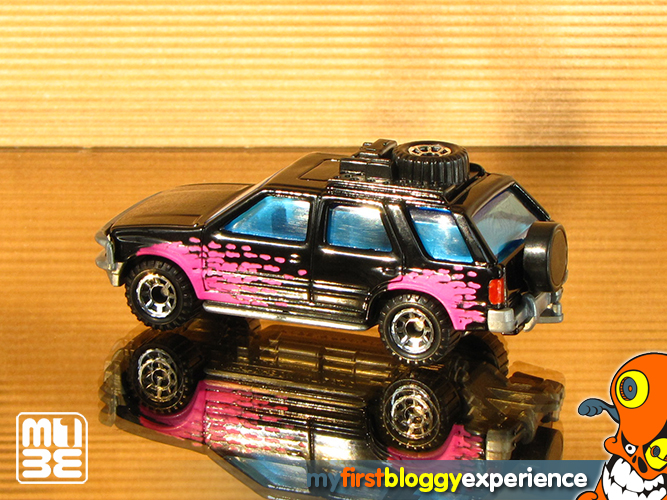
1990 - 1995 Isuzu Rodeo / Chevrolet Rodeo 4WD (4x4) 3.2(L)i V6 (MU Series) Right Hand Drive - Midsize 5-Door SUV / Off-Road - 1995 1-75 Series (Mainline) MB957 56 / 75 Diecast Scale 1:62 by Matchbox

For English version scroll below 
Japón y Colombia (Suramérica), esta última mi patria por cierto, han tenido una muy buena relación por bastante tiempo, al menos desde la primera mitad de los 50s y yo diría, no solo en términos de asuntos comerciales, sino en otros ámbitos y por eso es que hay cierta familiaridad cuando hablo acerca de la tierra del sol naciente... 

La industria automotriz japonesa ha estado haciendo negocios en nuestro territorio desde la época ya mencionada y si bien Isuzu Motors Ltd., no fue la primera compañía que arribó a nuestro país, ese privilegio le pertenece a Toyota Motor Co., es una marca ampliamente reconocida aquí, especialmente en lo que tiene que ver con el segmento de vehículos comerciales para trabajo liviano, mediano y pesado... 

Isuzu de hecho arribó a Colombia alrededor de 1979, cuando otras marcas de autos japonesas estaban ya establecidas, obviamente Toyota era una de ellas, seguida poco después por Nissan / Datsun y por ese tiempo, vehículos de esta proveniencia tenían una muy buena reputación por calidad y confiabilidad. 

El primer producto que esta empresa trajo al mercado colombiano fue una camioneta pickup subcompacta para trabajo liviano, conocida en el mercado japonés y en otros mercados como: Isuzu Faster, KB, TF, P’Up o Kenzu, pero aquí fue comercializada como la famosa (localmente) Chevrolet Luv y bueno, no es de extrañar, ya que para 1972 General Motors tenía más de 30% de participación en esta compañía. 

Ahora, mi invitada para esta publicación: la Isuzu Rodeo / Chevrolet Rodeo 4WD (4x4) 3.2(L)i V6 (Serie MU) Volante a la Derecha de 1990 - 1995, una VDU (Vehículo Deportivo Utilitario - SUV, por sus siglas en inglés) de Tamaño Mediano 5 Puertas / Todoterreno, representa la primera generación de un vehículo producido entre 1989 y 2004, el cual es un derivado de la Faster (Luv), solo que un poco más grande, de allí el cambio de categoría / clase. 

La presentada esta vez, no obstante, es la versión para mercados como: Japón, Australia, Reino Unido, Alemania, Suráfrica y otros países donde el volante a la derecha (VD - RHD, por sus siglas en inglés) es la norma; aquí en mi patria, por otro lado (literalmente), usamos vehículos con volante a la izquierda (VI - LHD, por sus siglas en inglés) y como podrías esperar, la Rodeo importada al mercado colombiano tenía esta última configuración, pero aparte de eso, la Chevrolet vendida aquí era prácticamente idéntica a su contraparte VD. 

Recuerdo muy bien este vehículo, porque uno de mis ex-jefes, cuando solía trabajar de planta (ahora trabajo freelance mayoritariamente de forma remota), compró una de ellas apenas fue importada y pensé que era una VDU genial, quiero decir todavía me gusta mucho esta Rodeo, a pesar del hecho que para algunas personas es algo rústica, lo cual hasta cierto punto es comprensible ya que está basada en una camioneta pickup y en ese sentido, no es una crossover, pero ofrece suficientes comodidades para ser considerada un vehículo "civilizado"... 

Cuando como coleccionista con experiencia digo que los buenos tiempos de Matchbox están en el pasado, no en el presente, lo digo en serio y he sido capaz de confirmar que mi percepción sobre la marca naranja de Mattel es compartida por otros coleccionistas de juguetes y réplicas a escala en diecast alrededor del mundo... 

Probablemente, porque nosotros los coleccionistas sabemos lo que MBX solía ser, su historia, su proceso y cuando comparamos los productos desarrollados en el pasado, con lo que se produce en la actualidad, no hay posibilidad de llegar a una conclusión diferente, realmente es así de simple... 

La evidencia visual me da la razón y para cualquiera que quiera ir más allá de la insidiosa estrategia de publicidad de Mattel, es bastante claro que Matchbox solía ser más sustancia y menos apariencia, hoy en día es más bien lo contrario. 

Es algo irónico (o tal vez no demasiado una vez que piensas acerca de esto) que mi invitada para esta reseña pertenezca a la era cuando la marca naranja era parte todavía de Tyco Toys Inc., en esa época, el diseño de tarjeta era, uhmmm, estridente y no muy atrayente por decir lo menos, pero los coches de juguete era mucho más satisfactorios para los coleccionistas adultos, porque el foco estaba en el producto, no tanto en la presentación, lo cual en un coleccionable de este tipo es el enfoque correcto... 

Quiero decir, ¿de qué sirve tener una tarjeta agradable, con un diseño elegante, algunas veces incluir una base de exhibición o una fabulosa caja de colección, si el carro de juguete está pobremente fabricado y/o moldeado, presentando demasiado plástico y/o acabados deficientes en términos de pintura y/o decoración, como está sucediendo actualmente de forma regular?... 

¿Cuál es el punto de traducir los esfuerzos de diseñadores talentosos en productos que no están a la altura de las expectativas de los coleccionistas adultos en la mayoría de casos, ni siquiera para los niños y con todo, más costosos que productos fabricados en el pasado, los cuales a propósito ofrecían mejores caracteristicas que sus contrapartes más recientes?... 

Bueno, veamos de lo que estoy hablando, introduciendo mi invitada para esta publicación y sus características, una vez que comparas lo que este artículo tiene que ofrecer, con lo que es ofrecido hoy en día, podrías sacar tus propias conclusiones y tener una perspectiva diferente, más cercana a la realidad, a lo que puedes verificar a simple vista, en lugar de guiada por los argumentos de ventas engañosos de compañías que están mucho más preocupadas de sus ganancias y sus accionistas, que de sus propios productos o servicios... 

Conseguí esta Isuzu Rodeo en su versión auto de juguete a través del mercado secundario, con la ayuda de un amigo mío, colega coleccionista e importador / vendedor privado, quien también vive en mi ciudad natal, hace más o menos 6 años; pertenece a la Serie 1-75 de 1995, es decir, la Línea Principal de Matchbox y por obvias razones, era imposible obtener este viejo artículo a través del mercado primario. 

Este es de hecho el debút del modelo, lanzado en 1995, una de las dos variaciones para ese año, ha tenido al menos 21 iteraciones, incluyendo variaciones, todas para líneas de la categoría Regular y fue ofrecida hasta 2006, cuando fue retirada, ya veremos por qué; el modelo fue lanzado también como Vauxhall Frontera para el mercado europeo, por eso es que su nombre fue impreso y no moldeado en el chasis. 

Tiene carrocería en diecast y chasis en plástico plateado, el molde de este último incluye la barra de empuje / protector frontal y un gancho de remolque en la parte trasera, ambos toques muy bienvenidos y algunos detalles para el sistema de escape y la transmisión, la dosis de diecast es apropiada y el producto luce fuerte, pero el nivel de detalle es mucho mejor que lo que encuentras en modelos actuales, más sobre eso después. 

El trabajo de pintura fue hecho en negro con acabado brillante, complementado por una decoración muy en el estilo de los 90s con salpicaduras en fucsia fluorescente, hecha con tampos, sobre los paneles laterales (probablemente no es el diseño más afortunado, pero es un vehículo de los 90s), añadí detalles pintados en rojo metalizado para las luces de cola, pero debido a la barra de empuje / protector frontal, no pude añadir detalles para los faros delanteros. 

Los interiores en blanco tienen un nivel de detalle básico, las ventanas están tintadas en azul y eso no es tan realista, pero no es demasiado molesto y aquí es donde tenemos los increíbles extras incluidos con este coche de juguete, porque no tiene uno sino dos insertos plásticos, uno para el paquete del techo que incluyó una rueda moldeada con rim cromado y la rueda de repuesto con cubierta, en negro, lo cual representa básicamente un modelo con 6 partes, en lugar de las 4 partes habituales. 

Hoy en día, un modelo como este sería despojado de sus interiores, con el fin de ofrecer un paquete de techo o una rueda de repuesto con cubierta, quizás ambos, no apostaría por eso y ventanas opacas, parte del mismo molde de los accesorios ya mencionados, con los pilares B y C como parte de las ventanas, no de la carrocería o incluso el techo completo hecho en plástico. 

Si este modelo fuera ofrecido con las mismas características mostradas aquí, sería parte de una línea Adulta o De Lujo, y tendrías que pagar mucho más por él: grandioso, ¿cierto?, no lo creo. 

Ahora, háblame más acerca de cuán mejores son los carros de juguete hechos por Matchbox bajo la sombrilla de Mattel, con respecto a modelos ofrecidos en el pasado, como el que estoy presentando para esta publicación, te reto... 

Finalmente, las ruedas plásticas presentan diseño de rimes 8 Spokes Industrial con acabado cromado, este diseño se ajusta como un guante un VDU 4x4 SUV como esta Isuzu Rodeo y fue hecha en Tailandia... 

Ezq 34:25-31 "Y estableceré con ellos pacto de paz, y haré cesar de la tierra las malas bestias; y habitarán en el desierto seguramente, y dormirán en los bosques. Y daré a ellas, y a los alrededores de mi collado, bendición; y haré descender la lluvia en su tiempo, lluvias de bendición serán. Y el árbol del campo dará su fruto, y la tierra dará su fruto, y estarán sobre su tierra seguramente; y sabrán que yo soy JEHOVÁ, cuando quebrare las coyundas de su yugo, y los libraré de mano de los que se sirven de ellos. Y no serán más presa de las gentes, ni las bestias de la tierra las devorarán; sino que habitarán seguramente, y no habrá quien espante; y despertaréles una planta por nombre, y no más serán consumidos de hambre en la tierra, ni serán más avergonzados de las gentes. Y sabrán que yo su DIOS JEHOVÁ soy con ellos, y ellos son mi pueblo, la casa de Israel, dice el SEÑOR JEHOVÁ. Y vosotras, ovejas mías, ovejas de mi pasto, hombres sois, y yo vuestro DIOS, dice el SEÑOR JEHOVÁ."

English version 
Japan and Colombia (South America), the latter my homeland by the way, have had a very good relationship for quite a while, at least since the first half of the 50s and I would say, not only in terms of commercial affairs, but in other fields and that’s why there is a certain familiarity when I talk about the land of the rising sun... 

The Japanese automotive industry has been doing business in our territory since the time already mentioned and while Isuzu Motors Ltd., was not the first company arriving to our country, that privilege belongs to Toyota Motor Co., it’s a brand widely recognized here, specially in what has to do with the segment of light, medium and heavy duty commercial vehicles... 

Isuzu in fact arrived to Colombia around 1979, when other Japanese car brands were already established, obviously Toyota was one of them, followed shortly after by Nissan / Datsun and by that time, vehicles from that provenance had a very good reputation for quality and reliability. 

The first product this company brought to the Colombian market was a subcompact light duty pickup truck, known in the Japanese market and other markets as: Isuzu Faster, KB, TF, P’Up or Kenzu, but here it was marketed as the (locally) famous Chevrolet Luv and well, it’s no wonder, since for 1972 General Motors had a more than 30% stake in this company. 

Now, my guest for this publication: the 1990 - 1995 Isuzu Rodeo / Chevrolet Rodeo 4WD (4x4) 3.2(L)i V6 (MU Series) Right Hand Drive, a Midsize 5-Door SUV / Off-Road, represents the first generation of a vehicle produced between 1989 and 2004, which is a derivative of the Faster (Luv), only that a little bigger, hence the change of category / class. 

The one featured this time, nonetheless, is the version for markets like: Japan, Australia, United Kingdom, Germany, South Africa and other countries where the right hand drive (RHD) is the norm; here in my homeland, on the other hand (literally), we use left hand drive (LHD) vehicles and as you could expect, the Rodeo imported to the Colombian market had the latter configuration, but other than that, the Chevrolet sold here was virtually identical to its RHD counterpart. 

I remember very well this vehicle, because one of my former bosses, when I used to work in-house (now I work freelance mostly remotely), bought one of them barely it was imported here and I thought it was a cool SUV, I mean, I still like this Rodeo very much, despite the fact that for some people is kind of rustic, which up to a point is understandable since it’s based on a pickup truck and in that sense, is not a crossover, but it offers enough amenities to be considered a "civilized" vehicle... 

When as experienced collector I say that the good times of Matchbox are in the past, not in the present, I mean it and I have been able to confirm that my perception about the orange brand of Mattel is shared by other collectors of diecast toy cars and scale replicas around the world... 

Probably, because we the collectors know what MBX used to be, its history, its process and when we compare products developed in the past, with what is produced currently, there is no chance of coming to a different conclusion, it’s really that simple... 

Visual evidence proves me right and for anyone who wants to go beyond the insidious advertising strategy of Mattel, it’s pretty clear that Matchbox used to be more substance and less appearance, nowadays it’s rather the opposite. 

It’s kind of ironic (or maybe not so much once you think about it) that my guest for this review belongs to the era when the orange brand was still part of Tyco Toys Inc., at that time, the card design was, uhmmm, strident and not so attractive to say the least, but the toy cars were much more satisfying for adult collectors, because the focus was in the product, not so much in the presentation, which in a collectible of this kind is the right approach... 

I mean, what’s the use of having a nice card, with a sleek design, sometimes even including a display base or a great collector box, if the toy car is poorly manufactured and/or molded, featuring too much plastic and/or subpar finishes in terms of paint and/or decoration, as it’s happening currently in a regular basis?... 

What’s the point of translating the efforts of talented designers into products that are not up to expectations for adult collectors in most cases, not even for kids and yet, more expensive than products manufactured in the past, which by the way offered better features than their more recent counterparts?... 

Well, let’s see what I’m talking about, introducing my guest for this publication and its features, once you compare what this item has to offer, with what is offered nowadays, you could draw your own conclusions and have a different perspective, closer to reality, to what you can verify naked eye, instead of guided by misleading sales pitches from companies that care much more about their profits and shareholders, than about their own products and services... 

I got this Isuzu Rodeo in its toy car version through the secondary market, with a help of a friend of mine, fellow collector and importer / private seller, who also lives in my hometown, pretty much 6 years ago; it belongs to the 1995 1-75 Series, i.e., the Mainline of Matchbox and for obvious reasons, it was impossible to get this old item through the primary market. 

This is in fact the debut of the model, released in 1995, one of the two variation for that year, it has had at least 21 iterations, including variations, all for lines in the Regular category and it was offered until 2006, when it was retired, we’ll see why; the model was released as well as Vauxhall Frontera for the European market, that’s why its name was printed and not molded on the chassis. 

It has diecast body and silver plastic chassis, the mold of the latter includes push bar in front and tow hook at the rear, both very welcome touches and some details for the exhaust system and transmission, the dose of diecast is appropriate and the product looks sturdy, but the level of detail is much better than what you find in current models, more on that later. 

The paint job was made in black with glossy finishing, complemented by a decoration very in the style of the 90s with splatters in fuchsia fluorescent, made with tampos, on the side panels (probably not the most fortunate design, but it’s a vehicle from the 90s), I added painted details in metallic red for the tail lights, but due to the push bar, I couldn’t add details for the head lights. 

The interiors in white have a basic level of detail, the windows are blue tinted and that’s not so realistic, but it’s not too bothering and here is where we have the incredible extras included with this toy car, because it has not one but two plastic inserts, one for the roof pack that includes a molded wheel with chrome rim and the spare wheel with cover, in black, which represents basically a model with 6 parts, instead of the usual 4 parts. 

Nowadays, a model like this would be stripped off of its interiors, in order to offer a roof pack or a spare wheel with cover, perhaps both, I wouldn’t bet on that and opaque windows, part of the same mold of the accessories already mentioned, with the pillars B and C as part of the windows, not of the body or even the whole roof made in plastic. 

If this model were to be offered with the same features displayed here, it would be part of an Adult or Deluxe line, and you would have to pay much more for it: great, right?, I don’t think so. 

Now, tell me more about how much better are the current toy cars made by Matchbox under the umbrella of Mattel, regarding models offered in the past, like the one I’m featuring for this publication, I dare you... 

Finally, the plastic wheels feature 8 Spokes Industrial rims design with chrome finishing, this design fits like a glove a 4x4 SUV like this Isuzu Rodeo and it was made in Thailand... 

Ezk 34:25-31 "And I will make with them a covenant of peace, and will cause the evil beasts to cease out of the land: and they shall dwell safely in the wilderness, and sleep in the woods. And I will make them and the places round about my hill a blessing; and I will cause the shower to come down in his season; there shall be showers of blessing. And the tree of the field shall yield her fruit, and the earth shall yield her increase, and they shall be safe in their land, and shall know that I am the LORD, when I have broken the bands of their yoke, and delivered them out of the hand of those that served themselves of them. And they shall no more be a prey to the heathen, neither shall the beast of the land devour them; but they shall dwell safely, and none shall make them afraid. And I will raise up for them a plant of renown, and they shall be no more consumed with hunger in the land, neither bear the shame of the heathen any more. Thus shall they know that I the LORD their GOD am with them, and that they, even the house of Israel, are my people, saith the LORD GOD. And ye my flock, the flock of my pasture, are men, and I am your GOD, saith the LORD GOD."

Sunday, March 15, 2020

1972 Chevrolet Luv (Custom) - Subcompact Light Duty Class 1 Pickup Truck (Custom ’72 Chevy Luv) 2016 HW Hot Trucks Series 8/10 - 148/250 Diecast Scale 1:64 by Hot Wheels


Mercados diferentes, productos diferentes: eso es lo que la lógica en los negocios manda, en teoría es el camino hacia el éxito ya que es sensato adaptar un producto o servicio a los gustos y/o necesidades de un público objetivo, pero en la práctica no siempre es así, porque siempre está una especie de "factor X" o más propiamente, los "imprevistos"... 

A finales de los 60s, prácticamente nadie en los Estados Unidos (excepto, supongo, los que tramaron esta crisis) estaba esperando una fuerte escasez de combustible, como la que tuvo lugar en ese tiempo y se extendió en mayor o menor grado hasta los 80s... 

Casi de repente, gente a la que le importaba un comino (o estaban muy acostumbradas a) los vehículos enormes con motores voraces y rendimiento indignante, tuvieron que enfrentar una situación en la cual los fierros norteamericanos ya no eran una opción sensata o costeable y productos extranjeros, especialmente de Europa y Asia, se convirtieron en el nuevo "establecimiento". 

Vehículos como mi invitada para esta publicación: la Chevrolet Luv (Custom) de 1972, una Camioneta Pickup Subcompacta para Trabajo Liviano Clase 1, no tendrían mucho sentido para el comprador promedio en la tierra de la bandarea salpicada de estrellas, durante los primeros años de los 60s, pero en 1972, cuando fue introducida, sí llamó la atención. 

La Luv fue básicamente una Isuzu Faster (o KB o Bedford KB, dependiendo del mercado) renombrada, importada de Japón y ya que General Motors es parcialmente dueña de Isuzu, fue una movida esperada del gigante azul para tratar con la competencia de productos similares como la: Nissan / Datsun 620 / 521, Toyota Hilux, Ford / Mazda Courier (Serie B), Mazda Repu, Mitsubishi Mighty Max / Dodge D50 / Dodge Ram 50 / Plymouth Arrow. 

Ahora, la Chevy Luv no era una camioneta pickup particularmente potente o rápida, la tecnología automotriz disponible en ese momento no permitía semejantes "lujos" con motores pequeños; en teoría, no fue una pickup "apropiada" para el mercado norteamericano, pero los "imprevistos" la transformaron en una opción seria a considerar. 

Desventajas en esta clase de pickups subcompactas como su escasa potencia, su tendencia a oxidarse en un santiamén, su platón diminuto o su lentitud, fueron más que compensadas por su confiabilidad, su bajo precio inicial (menos de US$ 2.000 a principios de los 70s, comparado con US$ 2.700 por una Chevy C10) y especialmente su eficiencia en el uso de combustible. 

Y la Luv es significativa para mí porque aunque la primera generación de este modelo (1972-1980) nunca arribó a mi patria (Colombia), las generaciones segunda y tercera, así como la D-Max, son vistas normales aquí. 

Vale la pena mencionar que a principios de los 70s, la pickup Kia Master, también conocida como Kia Brisa II pickup (basada en el Mazda Familia 1000 / 1200 / 1300), un vehículo con un perfil similar al de la Luv y fabricada por Kia, el primer vehículo que esta compañía hizo en efecto, fue introducida aquí en Colombia (Suramérica) por la época en que la Chevy Luv estaba haciendo de las suyas en EE.UU... 

Los diseñadores asiáticos en Hot Wheels han hecho una gran contribución a esta marca, como todos los diseñadores, por supuesto, introduciendo lo que algunas personas consideran "modelos oscuros", un término que tiene que ver más con la relativamente escasa popularidad de ciertos vehículos, más bien que con su rareza real en el mercado automotor... 

La Chevy Luv del 72 que estoy presentando para esta reseña fue un desarrollo de Ryu Asada, un diseñador japonés que ha estado trabajando con Mattel desde 2004, primeramente en productos Matchbox y desde 2012 en productos Hot Wheels para la categoría Regular / Básica. 

Su trabajo en este modelo es agradable, con una personalización moderada, sentándose muy baja en el piso (una personalización usual en Luvs reales), quemacocos y motor sobresaliente que la hacen lucir como una dragster; la mía es el debút de este modelo para la Serie HW Hot Trucks de 2016 y hasta aquí ha tenido al menos 7 iteraciones, solo para la Línea Principal; la conseguí a través del mercado primario, en una tienda minorista. 

Tiene carrocería en diecast y chasis plástico en amarillo, la dosis de diecast es decente y preferiría acabado cromado para el chasis  (un acabado "demasiado costoso" para un artículo Básico, de acuerdo con algunos ejecutivos en HW, pero se atreven todavía a ofrecer la Serie Super Chromes para la Línea Principal, sin reparos o excusas inventadas, "curioso", ¿cierto?), aunque un color a juego luce bien también. 

El trabajo de pintura fue hecho en amarillo claro, complementado por una decoración con tampos y/o calcomanías para el capó y paneles laterales, en naranja, rojo y negro, similar al paquete de vinilos Mighty Mike ofrecido para la Luv en los 70s, desafortunadamente la ejecución de esta decoración es pobre, con feos bordes irregulares: es otro caso de buen diseño y mala ejecución / baja calidad, típico en Hot Wheels. 

Me gusta el ingenioso uso de cromado para la parrilla y luces frontales, el motor sobresaliente, los peculiares interiores y el platón; tiene ventanas ahumadas, las ruedas plásticas presentan diseño de rimes 5 Spoke en cromado y fue hecho en Malasia... 

Hch 10:30-39 "Entonces Cornelio dijo: hace cuatro días que a esta hora yo estaba en ayunas; y a la hora novena, mientras oraba en mi casa, vi que se puso delante de mí un varón con vestido resplandeciente, y dijo: Cornelio, tu oración ha sido oída, y tus limosnas han sido recordadas delante de DIOS. Envía, pues, a Jope, y haz venir a Simón el que tiene por sobrenombre Pedro, el cual mora en casa de Simón, un curtidor, junto al mar; y cuando llegue, él te hablará. Así que luego envié por ti; y tú has hecho bien en venir. Ahora, pues, todos nosotros estamos aquí en la presencia de DIOS, para oír todo lo que DIOS te ha mandado. Entonces Pedro, abriendo la boca, dijo: en verdad comprendo que DIOS no hace acepción de personas, sino que en toda nación se agrada del que le teme y hace justicia. DIOS envió mensaje a los hijos de Israel, anunciando el evangelio de la paz por medio de Jesucristo; éste es SEÑOR de todos. Vosotros sabéis lo que se divulgó por toda Judea, comenzando desde Galilea, después del bautismo que predicó Juan: cómo DIOS ungió con el Espíritu Santo y con poder a Jesús de Nazaret, y cómo éste anduvo haciendo bienes y sanando a todos los oprimidos por el diablo, porque DIOS estaba con él. Y nosotros somos testigos de todas las cosas que Jesús hizo en la tierra de Judea y en Jerusalén; a quien mataron colgándole en un madero..."

ENGLISH 
Different markets, different products: that’s what the logic in business commands, in theory is the way to success since it’s sensible to tailor a product or service to the tastes and/or needs of a target audience, but in practice it’s not always like that, because there is always a sort of "X factor" or more properly, the "incidentals"... 


In the late 60s, virtually nobody in United States (except, I guess, those who plotted that crisis) was expecting a serious fuel shortage, like the one that took place at that time and spread to a greater or lesser degree until the 80s... 

Almost suddenly, people who didn’t give a damn about (and were very used to) huge vehicles with voracious engines and outrageous performance, had to face a situation in which American irons were no longer a sensible or affordable option and foreign products, specially from Europe and Asia, became the new "establishment". 

Vehicles like my guest for this publication: the 1972 Chevrolet Luv (Custom), a Subcompact Light Duty Class 1 Pickup Truck, wouldn’t make much sense for the average buyer in the land of the star spangled flag, during the first years of the 60s, but in 1972, when it was introduced, it did get some attention. 

The Luv was basically an Isuzu Faster (or KB or Bedford KB, depending on the market) rebadged, imported from Japan and since General Motors is partially owner of Isuzu, it was an expected move of the blue giant to deal with the competition of similar products like the: Nissan / Datsun 620 / 521, Toyota Hilux, Ford / Mazda Courier (B Series), Mazda Repu, Mitsubishi Mighty Max / Dodge D50 / Dodge Ram 50 / Plymouth Arrow. 

Now, the Chevy Luv was not a particularly powerful or fast pickup truck, the automotive technology available at that moment didn’t allow such "luxuries" with small engines; in theory, it wasn’t the "suitable" pickup for the American market, but the "incidentals" transformed it in a serious option to consider. 

Drawbacks in this kind of subcompact pickups like their meager power, their tendency to rust in a jiffy, their tiny bed or their slowness, were more than compensated by their reliability, their low asking price (less than US$ 2,000 in the early 70s, compared with US$ 2,700 for a Chevy C10) and specially their fuel efficiency. 

And the Luv is meaningful for me because albeit the first generation of this model (1972-1980) never arrived to my homeland (Colombia), the second and third generations, as well as the D-Max, are normal sights here. 

It’s worth mentioning that by the early 70s, the Kia Master pickup, also known as Kia Brisa II pickup (based on the Mazda Familia 1000 / 1200 / 1300), a vehicle with a similar profile to that of the Luv and manufactured by Kia, the first vehicle this company made indeed, was introduced here in Colombia (South America) by the time the Chevy Luv was making the rounds in U.S... 

Asian designers at Hot Wheels have made a great contribution to this brand, as all designers, of course, introducing what some people consider "obscure models", a term that has to do more with the relatively scarce popularity of certain vehicles, rather than with their actual rarity in the automotive market... 

The ’72 Chevy Luv I’m featuring for this review was a development by Ryu Asada, a Japanese designer who has been working with Mattel since 2004, firstly in Matchbox products and since 2012 in Hot Wheels products for the Regular / Basic category. 

His work in this model is nice, with a moderate customization, sitting very low on the ground (an usual customization in actual Luvs), sunroof and protruding engine that makes it look like a dragster; mine is the debut of this model for the 2016 HW Hot Trucks Series and so far it has had at least 7 iterations, only for the Mainline; I got it through the primary market, in a retail store. 

It has diecast body and plastic chassis in yellow, the dose of diecast is decent and I would prefer chrome finishing for the chassis (a "too expensive" finishing for a Basic item, according to some executives in HW, but they still dare to offer the Super Chromes Series for the Mainline, without qualms or made-up excuses, "curious", right?), although a matching color looks fine too. 

The paint job was made in light yellow, complemented by a decoration with tampos and/or decals for the hood and side panels, in orange, red and black, similar to the Mighty Mike vinyl package offered for the Luv in the 70s, unfortunately the execution of this decoration is poor, with ugly irregular edges: it’s another case of good design and bad execution / low quality, typical in Hot Wheels. 

I like the witty use of chrome for the front grille and lights, the protruding engine, the quirky interiors and the bed; it has smoked windows, the plastic wheels feature 5 Spoke rims design in chrome and it was made in Malaysia... 

Act 10:30-39 "And Cornelius said: four days ago I was fasting until this hour; and at the ninth hour I prayed in my house, and, behold, a man stood before me in bright clothing, and said: Cornelius, thy prayer is heard, and thine alms are had in remembrance in the sight of GOD. Send therefore to Joppa, and call hither Simon, whose surname is Peter; he is lodged in the house of one Simon a tanner by the sea side: who, when he cometh, shall speak unto thee. Immediately therefore I sent to thee; and thou hast well done that thou art come. Now therefore are we all here present before GOD, to hear all things that are commanded thee of GOD. Then Peter opened his mouth, and said: of a truth I perceive that GOD is no respecter of persons: but in every nation he that feareth him, and worketh righteousness, is accepted with him. The word which GOD sent unto the children of Israel, preaching peace by Jesus Christ: (he is LORD of all:) that word, I say, ye know, which was published throughout all Judea, and began from Galilee, after the baptism which John preached; how GOD anointed Jesus of Nazareth with the Holy Ghost and with power: who went about doing good, and healing all that were oppressed of the devil; for GOD was with him. And we are witnesses of all things which he did both in the land of the Jews, and in Jerusalem; whom they slew and hanged on a tree..."

Sunday, September 20, 2015

2000 Isuzu / Chevrolet FVR / FTR / FSR Flatbed Class 6 Medium Duty COE Truck (Flatbed Truck) 2001 Highway Heroes Series (4/5) 14/75 Diecast Scale 1:90 by Matchbox


¿Cuántas veces has escuchado un periodista o experto en autos, estallando en elogios por un vehículo utilitario o un camión, en uno de esos populares programas de TV sobre coches?... 

No muchas, supongo, pero si tuvieran que hablar sobre un Ferrari, por ejemplo, ostentarían una ultrajante verborragia, donde comentarios extensos, frecuentes alusiones a su linaje e historia, descripciones minuciosas de su diseño y desempeño, serían la nota predominante y harían que su tiempo al aire fuera demasiado corto para su gusto... 

El asunto cambia, si el tema fuera los vehículos de servicio, porque su experticia se quedaría corta y, para de salir del paso, desviarían la charla diciendo que en realidad prefieren reseñar cosas más "interesantes" o excusas ridículas como esa... 

Pero afrontémoslo amigos, los pesos pesados en el mundo automotriz son un tema que pocas personas manejan con propiedad, los "conocedores" están pegados a su zona de confort y los vehículos con más de 4 ruedas son tabú en la mayoría de casos. 

De hecho, los camiones son un mundo aparte y con el fin de explicar lo que llamaría el "quid del asunto", usaré un ejemplo muy pragmático: puedes ver a un adolescente de 13 años, conduciendo un vehículo de pasajeros, sin un entrenamiento extensivo, haciendo un trabajo decente en la primera vez al volante y luego, puedes poner un piloto profesional de carros de carreras al volante de una tractomula, con remolque cargado sencillo, doble o triple y probablemente el / ella pedirá ayuda, porque es demasiado para ellos hacer un trabajo decente como este, de inmediato. 

Particularidades como esas, hacen el tema de los vehículos utilitarios y camiones muy sugestivo después de todo; obviamente, no pretendo ser un experto en el asunto, pero me encantan estos pesos pesados así que hago mis propias pesquizas, para darle contexto a mis coleccionables y traer a colación su importancia... 

Esta vez, el invitado en mi blog es un vehículo que será familiar para muchos, ya que ha sido ampliamente producido y comercializado prácticamente en todo el mundo: el Camión COE (Cabina Sobre el Motor, por sus siglas en inglés) de Trabajo Mediano Isuzu FVR / FTR / FSR Cama Plana de 2000. 

La Serie F, también conocida como Forward, a la cual pertenece el modelo publicado hoy, ha estado alrededor desde 1970 y es una línea de vehículos comerciales hecha para atender el mercado de los camiones de servicio mediano. 

El éxito y la popularidad de esta línea, están respaldados por un gran jugador en este segmento: Isuzu Motors Limited, una compañía japonesa con casa matriz en Tokio, con una sólida reputación en la fabricación de camiones comerciales y también motores diesel. 

Es curioso cómo esta marca empezó produciendo autos de pasajeros, los cuales disfrutaron de algún reconocimiento en su mercado local (Japón), pero son difícilmente conocidos en otros países, especialmente del hemisferio occidental (los más representativos son el Isuzu Bellel y el Bellet). 

Esta compañía hizo varias alianzas con otros fabricantes de coches como: Wolseley Motors Limited, Rootes Group, Fuji Heavy Industries (Subaru), Mitsubishi Motors, Nissan Motor Company Limited, Suzuki Motor Corporation y Honda Motor Company; pero la asociación más importante hasta ahora, ha sido con General Motors Company. 

Gracias a este último proyecto conjunto, los productos de Isuzu tuvieron una amplia entrada en América y otros continentes donde GM tiene influencia. 

Por esa misma razón, camionetas pickup, vehículos deportivo-utilitarios (SUVs, por sus siglas en inglés), camiones de trabajo liviano, mediano y pesado, así como motores diesel hechos por Isuzu, son bien conocidos en mi patria, Colombia; no obstante, son comercializados como modelos Chevrolet en la mayoría de casos (una notable excepción que podría mencionar, es la segunda generación de la Trooper, que fue presentada como Isuzu). 

El Chevrolet FVR / FTR / FSR (Isuzu FVR / FTR / FSR), disfruta de una buena reputación local con el gremio del transporte, en parte a causa de la confiabilidad de estos camiones y en parte a causa de la extensa red de concesionarios Chevrolet. 

Para el modelo Isuzu FTR 800 Turbo, el tren de potencia era un motor de 433 pulgadas cúbicas, 7.1 L, 6 Cilíndros en Línea Isuzu 6HE1-Ti Diesel, intercooler turbocargado, acoplado a una transmisión manual de 6 velocidades Isuzu MLD6Q... 

Cuando conseguí este fabuloso modelo, con la ayuda de un amigo mío, colega coleccionista e importador, tuve el presentimiento que, a pesar de la carencia de alguna referencia específica, estaba basado en un camión real, porque su silueta general parecía familiar para mí. 

Matchbox está caracterizada por su enfoque particular en vehículos reales y esta marca hace un muy buen trabajo en ese sentido, a diferencia de Hot Wheels; incluso teniendo en cuenta que Mattel es el dueño actual de ambas marcas, los modelos de MBX, basados en vehículos reales, son todavía mejores en muchos casos, que sus contrapartes de HW. 

El artículo presentado en esta publicación fue apodado simplemente: "Flatbed Truck", un nombre muy genérico debo decir (aquí, el uso del término genérico sí es correcto =PPPPP) y pertenece a la Serie Highway Heroes (que consiste de 5 modelos, incluyendo este). 

A primera vista, parece otro auto conceptual de Matchbox, pero ya que no soy un recién llegado en esta afición, noté una particularidad en el chasis del diecast: tiene la escala 1:90 en el molde y los modelos de diseñador difícilmente incluyen una escala (los diseñadores de diecast usan la proporción como parámetro para sus creaciones no basadas en vehículos reales... Solo recuerda, proporción o tamaño, no es lo mismo que escala =PPPPP). 

La otra pista fue la cabina, cuyo diseño es muy similar a aquel de los Chevrolet / Isuzu FTR / FVR / FSR (he visto muchos en mi ciudad natal); pero las principales diferencias están la parte baja lateral, al frente, donde los estribos laterales cortos usuales debajo de las puertas fueron omitidos, el limpiabrisas central único, que no está presente en el camión real y la longitud del chasis, puesto que debería ser un poco más largo. 

Tiene carrocería y chasis en diecast; la carrocería recibió una trabajo de pintura en naranja brillante, con tampos en azul, rojo y blanco, presentando un logo Auto Club Unit, sobre los paneles laterales, mientras el chasis fue pintado en plateado. 

La cama baja fue hecha en plástico negro, es removible, tiene una interesante característica plegable luego, funciona como rampa y también extiende el área de carga, y un logo de Matchbox en blanco fue incluido al lado derecho. 

El modelo tiene interiores negros, ventanas ahumadas, un lindo inserto plástico para las luces de patrulla en azul, sobre el techo de la cabina, las ruedas son plásticas, con diseño de rimes 8 Spoke Industrial en cromado y fue hecho en China... 

Ecl 3:10-13 "Yo he visto el trabajo que DIOS ha dado a los hijos de los hombres para que se ocupen en él. Todo lo hizo hermoso en su tiempo; y ha puesto eternidad en el corazón de ellos, sin que alcance el hombre a entender la obra que ha hecho DIOS desde el principio hasta el fin. Yo he conocido que no hay para ellos cosa mejor que alegrarse, y hacer bien en su vida; y también que es don de DIOS que todo hombre coma y beba, y goce el bien de toda su labor."

ENGLISH 
How many times you have heard a journalist or a car expert, bursting into praise for an utilitarian vehicle or a truck, in one of those popular TV shows about cars?... 

Not many, I guess so, but if they had to talk about a Ferrari, for instance, they would flaunt an outrageous verbiage, where extensive comments, frequent allusions to its lineage and history, minute descriptions of its design and performance, would be the keynote and it would make that their air time were too short for their taste... 

The matter changes, if the topic were the duty vehicles, because their expertise would fall short and, to get by, they would divert the talk, saying that they actually prefer to review more "interesting" stuff or ridicule excuses like that... 

But let’s face it folks, the heavyweights in the automotive world are a topic that few people manage properly, the "connoisseurs" are glued to their comfort zone and the vehicles with more than 4 wheels are taboo in most cases. 

In fact, trucks are a world apart and in order to explain what I could call "the heart of the matter", I will use a very pragmatic example: you can see a 13 years old adolescent, driving a passengers vehicle, without an extensive training, doing a decent job in the first time at the wheel and then, you can put a professional pilot of race cars at the wheel of a semi truck, with single, double or triple trailer loaded and probably he / she will ask for help, because it’s a bit too much for them to do a decent job like this, right away. 

Particularities like those, make the topic of the utilitarian vehicles and trucks very suggestive after all; obviously, I don’t pretend to be an expert in the subject, but I love these heavyweights so I do my own research, to give context to my collectibles and bring up their importance... 

This time, the guest in my blog is a vehicle that will be familiar for many, since it has been widely produced and commercialized virtually worldwide: the 2000 Isuzu FVR / FTR / FSR Flatbed Medium Duty COE Truck. 

The F-Series, also known as Forward, to which belongs the model published today, has been around since 1970 and is a line of commercial vehicles made to cater the medium-duty trucks market. 

The success and popularity of this line, are backed up by a big player in this segment: Isuzu Motors Limited, a japanese company headquartered in Tokyo, with a strong reputation in the manufacture of commercial trucks and also diesel engines. 

It’s curious how this brand began producing passengers cars, which enjoyed some recognition in their local market (Japan), but are hardly known in other countries, specially from the western hemisphere (the most representative are the Isuzu Bellel and the Bellet). 

This company has made several alliances with other carmakers like: Wolseley Motors Limited, Rootes Group, Fuji Heavy Industries (Subaru), Mitsubishi Motors, Nissan Motor Company Limited, Suzuki Motor Corporation and Honda Motor Company; but the most important partnership until now, has been with General Motors Company. 

Thanks to this latter joint venture, Isuzu products had a wide market entry in America and other continents where GM has influence. 

For that very reason, pickups, sport utility vehicles (SUVs), light, medium and heavy duty trucks, as well as diesel engines made by Isuzu, are well known in my homeland, Colombia; nevertheless, these are commercialized as Chevrolet models in most cases (a notable exception I could mention, is the second generation Trooper, that was introduced as Isuzu). 

The Chevrolet FVR / FTR / FSR (Isuzu FVR / FTR / FSR), enjoys a good reputation with the local transport guild, partly because of the reliability of these trucks and partly because of the extensive Chevrolet dealer network. 

For the Isuzu FTR 800 Turbo model, the powertrain was a 433 cu in, 7.1 L, Inline 6 Isuzu 6HE1-Ti Diesel engine, intercooled turbocharged, mated to a 6-speed Isuzu MLD6Q manual transmission... 

When I got this great model, with the help of a friend of mine, fellow collector and importer, I had the feeling that, despite the lack of any specific reference, it was based on an actual truck, because its overall shape seemed familiar for me. 

Matchbox is characterized by its particular focus on actual vehicles and this brand makes a very good job in that sense, unlike Hot Wheels; even bearing in mind that Mattel is the current owner of both brands, the models made by MBX, based on actual vehicles, are still better in many cases, than their HW counterparts. 

The item introduced in this publication was dubbed simply: "Flatbed Truck", a very generic name I must say (here, the use of the term generic is correct =PPPPP) and it belongs to the Highway Heroes Series (consisting of 5 models, including this one). 

At first look, it seems another concept car by Matchbox, but since I’m not a newcomer in this hobby, I noticed a particularity in the chassis of the diecast: it has the 1:90 scale in the mold and the designer models hardly include a scale (the designers of diecast do use proportion as parameter for their creations not based on actual vehicles... Just remember, proportion or size, is not the same as scale =PPPPP). 

The other clue was the cabin, whose design is very similar to that of the Chevrolet / Isuzu FTR / FVR / FSR (I have seen many in my hometown); but the main differences are in the lower side, to the front, where the usual short running boards below the doors were omitted, the single central wiper, which is not present in the actual truck and the chassis length, inasmuch as it should be a little longer. 

It has diecast body and chassis; the body received a glossy orange paint job, with tampos in blue, red and white, featuring an Auto Club Unit logo, on the side panels, while the chassis was painted in silver. 

The flatbed was made in black plastic, it’s removable, it has an interesting foldable feature so, it works as a ramp and also extends the cargo area, and a Matchbox logo in white was included in the right side. 

The model has black interiors, smoked windows, a nice plastic insert for the patrol lights in blue, on top of the cabin, the wheels are plastic, with 8 Spoke Industrial rims design in chrome and it was made in China... 

Ecc 3:10-13 "I have seen the travail, which GOD hath given to the sons of men to be exercised in it. HE hath made every thing beautiful in his time: also HE hath set the world in their heart, so that no man can find out the work that GOD maketh from the beginning to the end. I know that there is no good in them, but for a man to rejoice, and to do good in his life. And also that every man should eat and drink, and enjoy the good of all his labor, it is the gift of GOD."