
Showing posts with label Kenworth. Show all posts

Sunday, March 6, 2022

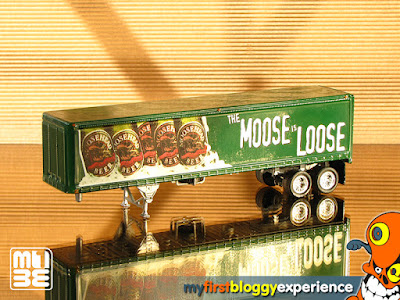
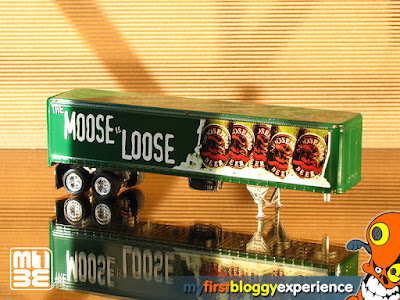
1973 - 1984 Kenworth K-100 Aerodyne COE (Cab Over Engine) 108" Cab 6x4 Semi Truck with Sleeper - Heavy Duty Class 8 Long Distance Hauling COE Tractor Truck with Tandem Axles and Vintage Utility / Dry Van Trailer - 1998 The North American Brewmaster Collection Series - Moosehead Beer - Diecast Scale 1:83 by Matchbox Collectibles

Hubo un tiempo cuando los camiones de Cabina Sobre el Motor o CSM (para abreviar), también conocidos como COE por sus siglas en inglés, dividieron las preferencias entre las personas dedicadas al negocio del transporte de carga en larga distancia, en el mercado de los Estados Unidos, ya fueran propietarios, operadores o ambos y ese tiempo no fue hace mucho... 

Quiero decir, su mercado para camiones de trabajo pesado (Clase 7 y 8 de acuerdo con la clasificación vigente allí) solía tener 3 opciones principales para la configuración de cabezote tractor / tractocamiones: convencional, convencional corta y CSM / COE (como mencioné aquí)... 

La mayoría de los fabricantes más importantes de esta clase de vehículos en la tierra de la bandera tachonada de estrellas, ofrecieron sus productos en las 3 configuraciones ya mencionadas o al menos 2, incluyendo: Ford, Chevrolet / GMC, Dodge, International-Harvester (IH), Mack, Freightliner, Perterbilt, Kenworth, Autocar, incluso compañías menos conocidas o extintas como: Diamond Reo, Brockway, White, Marmon, Corbitt, Western Star, LeMoon, Hendrickson, etc. 

De hecho, cuando se trata de la configuración CSM / COE para vehículos de trabajo pesado, puedes trazar sus orígenes a los primeros camiones motorizados y eso significa, por allá en los primeros años de la segunda década del siglo pasado, pero debo mencionar que esos primeros camiones no tenían una cabina cerrada, estaban expuestos al clima inclemente, por eso es que no son considerados propiamente camiones CSM / COE. 

Los verdaderos camiones CSM / COE arribarían después, en la década de los 30s, pero su apogeo empezaría incluso más tarde, durante los 50s y continuaría hasta finales de los 70s, entonces su producción fue reducida gradualmente y algunos factores llevarían al completo cese de su producción para el mercado de Estados Unidos, en el segmento de trabajo pesado, tristemente. 

Mi invitado para esta publicación es uno de los representantes más reconocidos y amados de los buenos viejos días cuando los camiones CSM / COE fueron grandes favoritos: el Tracto Camión con Camarote Kenworth K-100 Aerodyne CSM / COE (Cabina Sobre el Motor) Cabina de 108" 6x4 de 1973 - 1984, un Tractocamión de Trabajo Pesado Clase 8 para Transporte de Carga en Larga Distancia con Ejes Tandem y Remolque Vintage Doble-Eje Tipo Furgón Seco / Utilitario. 

Estos mamuts de la carretera tuvieron un impacto profundo en el negocio de los camiones y este impacto no ha disminuido mucho en todos estos años, la Serie K100 así como la Serie W900 (su contraparte tractocamión convencional) son leyendas, aún son útiles para trabajar y admiradas por muchos, a pesar que no son una vista común hoy en día o probablemente por esa misma razón. 

Esas proporciones raras, nariz chata, forma encajada y otras peculiaridades, aún tienen un efecto poderoso incluso en gente que no es amante de los camiones y me gustaría hablar un poquitín acerca de porque desaparecieron del mercado en los Estados Unidos, pero eso será tema para una reseña futura, si DIOS permite, desde luego... 

En mi publicación anterior, de la cual puedes leer aquí, empecé a hablar sobre un par de estrategias que Mattel desarrolló, con el fin de atraer más compradores y eventualmente algunos coleccionistas adultos a sus líneas de productos de "alta gama": Hot Wheels Collectors y Red Line Club... 

Bien, esta vez estoy introduciendo un artículo parte de la estrategia de Matchbox para alcanzar el mercado de los coleccionistas adultos, que tiene ciertas similitudes con las que se mencionaron previamente, aunque basado en los artículos ofrecidos y sus características, es más apropiado compararla con la estrategia / línea de productos Hot Wheels 100%, que trabajó a través del sistema de orden directa por correo y la estrategia que estoy mencionando es Matchbox Collectibles, la cual introduje brevemente aquí... 

Si bien algunas personas reclaman que esta última comenzó durante la era Universal Toys de Matchbox, cuando se convirtió en Matchbox International Limited, en los 80s, es seguro decir que Matchbox Collectibles se materializó realmente unos años antes que la marca británica llegara a ser parte de los activos de Mattel: de hecho en esa época fue una división semi-independiente. 

Justo como sucede en el caso de Hot Wheels 100%, Matchbox Collectibles fue el único intento serio de esta marca para atender el segmento de los coleccionistas adultos buscando réplicas de vehículos a escala muy detalladas y realistas, que en muchos casos no estaban basadas en autos de juguete y requirieron el desarrollo de moldes nuevos, exclusivos para esta línea de productos, los cuales pueden ser clasificados en las categorías De Lujo e incluso Premium, dependiendo de la calidad y características generales del respectivo modelo. 

La estrategia Matchbox Collectibles permaneció activa hasta 2002, ofreciendo diferentes clases de vehículos incluyendo coches de pasajeros, camiones, pickups, VDUs, tanques y otros vehículos militares, aviones, maquinaria de construcción, etc., principalmente en escalas 1:18, 1:24, 1:43, 1:64, 1:72, 1:87 y 1:100, pero otras escalas fueron ofrecidas también. 

Ya sabes que la consistencia en la escala no es precisamente una de las fortalezas de los carros de juguete y réplicas a escala hechos por las marcas de Mattel: para esta Serie el artículo reclama ser escala 1:100, mientras que el mismo modelo para la Línea Principal de Matchbox reclama ser escala 1:90, pero resulta ser que la escala real es más cercana a 1:83, ¿preguntas sobre esto?... 

A pesar de su éxito gradual entre coleccionistas adultos, porque sí, nos tomó algún tiempo descubrir Matchbox Collectibles, especialmente las generaciones más recientes, a las cuales pertenezco, en una decisión algo arbitraria pero absolutamente intencional, esta estrategia fue descartada por Mattel "un poquitín" demasiado pronto (más acerca de eso en el futuro)... 

Conseguí el invitado que estoy introduciendo hoy a través del mercado secundario local, con la ayuda de unos amigos, colegas coleccionistas e importadores / vendedores privados, hace más o menos 5 años y debo decir que fue un hallazgo sorprendente, porque esta clase de artículos no son fáciles de encontrar en la actualidad, más aún considerando que fueron producidos hace casi 25 años. 

Este último hecho es lo que llama más poderosamente mi atención, porque mientras que los promotores de marca de Matchbox insisten hasta la saciedad en que "estamos atestiguando los mejores tiempos" para la marca naranja de Mattel, mintiendo con total cinismo por supuesto, puedes ver claramente como coleccionista adulto, que MBX solía ser mucho mejor en el pasado: otra muestra de campañas de mercadeo engañosas... 

Este fantástico camión de juguete pertenece a la Serie The North American Brewmaster Collection de 1998, también conocida como Serie King of Beers, Lanzamiento 1, presentando en este caso Moosehead Beer, un producto hecho por la Cervecería Moosehead, una compañía con sede en Nueva Escocia, Canadá y fundada por la familia Oland. 

El primer lanzamiento estaba compuesto por 6 tractocamiones presentando 6 marcas de cerveza: Miller Genuine Draft, Red Dog, Honey Brown, Corona Extra, Pabst Blue Ribbon y Moosehead. 

Esta línea pertenece a la categoría De Lujo, ya que sus cabezotes tractores están basados en camiones de juguete, simplemente no pueden ser artículos Premium (si quieres saber cuales son los requisitos básicos o parámetros para considerar un coleccionable como Premium, particularmente modelos a escala en diecast, puedes leer aquí, aquí, aquí, aquí, aquí, aquí, aquí y aquí). 

Pero tienen varias mejoras con respecto a los modelos en los cuales están basados, en este caso: el Kenworth Cabover Aerodyne, introducido en 1982 para la Línea Principal de Matchbox (Serie 1-75) y retirado en 1998. 

Tiene carrocería en diecast, la cual incluye la parte superior del chasis y la parte inferior del mismo fue hecha en plástico con acabado cromado, la sensación general de peso es muy apropiada, el remolque vintage, por otro lado, tiene construcción completa en diecast y es muy pesado; el nivel de detalle es sustancialmente mejor en el remolque que en el cabezote tractor, los gatos de remolque pueden ser doblados y un compartimento para la rueda de repuesto está incluido también. 

El trabajo de pintura fue hecho en verde oscuro con acabado brillante, complementado por tampos y/o calcomanías para detalles en casi todos los paneles, el chasis del remolque recibió pintura plateada con acabado de escarcha metálica. 

La cabina no tiene interiores, justo como el camión de juguete en el cual está basado, las ventanas son transparentes, hay insertos plásticos para los espejos retrovisores laterales que incluyen antenas. 

Ofrece ruedas multiparte presentando diseño de rimes 5 Spokes Dayton muy agradable y realista en cromado, con llantas en caucho sintético labradas de bajo perfil, pero en este aspecto no lucen realistas, porque no hay ruedas duales como en los tractocamiones reales y esta clase de vehículos usa llantas de perfil muy alto, así que la proporción no es correcta, obviamente. 

Sin embargo, ya que es un camión de juguete mejorado, supongo que deberías conformarte con lo que tienes aquí y para ser honesto, el balance general es muy favorable para el producto final, en mi opinión como coleccionista con alguna experiencia. 

En ese sentido, cuando comparas objetivamente los productos hechos por Matchbox Collectibles hace casi 25 años, con lo que esta marca está desarrollando para la plataforma / estrategia Mattel Creations, puedes concluir fácilmente que es solo otro pobre tributo a una marca que solía ser significativa y no le hace ningún favor a nuestra afición... 

Mattel Creations en sus propias palabras declara: "Para nosotros, los juguetes siempre han sido arte.", pero en la práctica esto significa: crear juguetes que en realidad no son tan costosos de producir como parecen o como Mattel reclama, darles glamur falso con tácticas de mercadeo, ponerles una etiqueta de precio inflado y llamarlo "arte"... 

¿El arte de embaucar a los clientes y especular con precios desde fábrica, más bien?, ¿a quién tratan de engañar?, no a nosotros los coleccionistas con experiencia, desde luego, porque nosotros no caemos en artimañas de mercadeo, ni creemos en palabrería barata... 

¡Qué contraste con lo que Matchbox Collectibles solía ofrecer, productos con mejor realismo, nivel de detalle, acabados, cantidad de piezas, extras incluidos, calidad general y más diecast, con una etiqueta de precio razonable encima de eso!...

Finalmente, este artículo incluye una base de exhibición plástica en negro, agradablemente texturizada en la parte superior, un certificado de autenticidad impreso en papel texturizado y fue hecho en China... 

Ezq 32:22-25 "Allí está Asiria con toda su multitud; en derredor de él están sus sepulcros; todos ellos cayeron muertos a espada. Sus sepulcros fueron puestos a los lados de la fosa, y su gente está por los alrededores de su sepulcro; todos ellos cayeron muertos a espada, los cuales sembraron el terror en la tierra de los vivientes. Allí Elam, y toda su multitud por los alrededores de su sepulcro; todos ellos cayeron muertos a espada, los cuales descendieron incircuncisos a lo más profundo de la tierra, porque sembraron su terror en la tierra de los vivientes, más llevaron su confusión con los que descienden al sepulcro. En medio de los muertos le pusieron lecho con toda su multitud; a sus alrededores están sus sepulcros; todos ellos incircuncisos, muertos a espada, porque fue puesto su espanto en la tierra de los vivientes, más llevaron su confusión con los que descienden al sepulcro; él fue puesto en medio de los muertos."

ENGLISH 
There was a time when Cab Over Engine or COE (for short) trucks divided the preferences among people dedicated to the business of long distance cargo transportation, in the market of United States, whether they were owners, operators or both and that time was not so long ago... 

I mean, its heavy duty trucks market (Class 7 and 8 according to the classification in force there) used to have 3 main options for the configuration of tractor heads / semi trucks: conventional, short conventional and COE (as I mentioned here)... 

Most manufacturers of this kind of vehicles in the land of the star studded flag, offered their products in the 3 configurations already mentioned or at least 2, including: Ford, Chevrolet / GMC, Dodge, International-Harvester (IH), Mack, Freightliner, Perterbilt, Kenworth, Autocar, even lesser known or extincted companies like: Diamond Reo, Brockway, White, Marmon, Corbitt, Western Star, LeMoon, Hendrickson, etc. 

In fact, when it comes to the COE configuration for heavy duty vehicles, you can trace its origin to the first motor trucks and that means, back in the early years of the second decade of the last century, but I must mention that those early trucks didn’t have a closed cabin, they were exposed to the inclement weather, that’s why they are not considered properly COE trucks. 

The true COE trucks would arrive later, in the 30’s decade, but their heyday would start even later, during the 50s and it would continue until late 70s, then their production was reduced gradually and some factors would lead to the complete cessation of their production for the market of United States, in the heavy duty segment, sadly. 

My guest for this publication is one of the most recognized and loved representatives of the good old days when COE trucks were great favorites: the 1973 - 1984 Kenworth K-100 Aerodyne COE (Cab Over Engine) 108" Cab 6x4 Semi Truck with Sleeper, a Heavy Duty Class 8 Long Distance Hauling COE Tractor Truck with Tandem Axles and Vintage Utility / Dry Van Trailer. 

These mammoths of the road had a deep impact in the trucking business and this impact has not diminished much in all these years, the K100 Series as well as the W900 Series (its conventional semi truck counterpart) are legends, they are still useful to work and admired by many, despite they are not a common sight nowadays or probably for that very reason. 

Those odd proportions, flat nose, boxy shape and other quirks, still have a powerful effect even on people who are not truck lovers and I would like to talk a little bit about why they disappeared of the market in United States, but that will be a topic for a future review, if GOD allows, of course... 

In my previous publication, of which you can read here, I started to talk about a pair of strategies that Mattel developed, in order to attract more buyers and eventually some adult collectors to its "high-end" lines of products: Hot Wheels Collectors and Red Line Club... 

Well, this time I’m introducing an item part of a strategy of Matchbox to reach the adult collectors market, that has certain similarities with the ones previously mentioned, although based on the items offered and their features, it’s more proper to compare it with the Hot Wheels 100% strategy / line of products, that worked through the direct mail order system and the strategy I’m mentioning is Matchbox Collectibles, which I introduced briefly here... 

While some people claim that the latter began during the Universal Toys era of Matchbox, when it became Matchbox International Limited, in the 80s, it’s safe to say that Matchbox Collectibles really materialized some years before the British brand became part of Mattel assets: in fact at that time it was a semi-independent division. 

Just like it happens in the case of Hot Wheels 100%, Matchbox Collectibles was the only serious attempt by this brand to cater the segment of adult collectors looking for very detailed and realistic scale replicas of vehicles, that in many cases were not based on toy cars and required the development of new molds, exclusive to this line of products, which can be classified in the Deluxe and even Premium categories, depending on the overall quality and features of the respective model. 

The Matchbox Collectibles strategy remained active until 2002, offering different kinds of vehicles, incluiding passenger cars, trucks, pickups, SUVs, tanks and other military vehicles, aircrafts, construction machinery, etc., mainly in 1:18, 1:24, 1:43, 1:64, 1:72, 1:87 and 1:100 scales, but other scales were offered as well. 

You know that scale consistency is not precisely one of the strengths of the toy cars and scale replicas made by the brands of Mattel: for this Series the item claims to be 1:100 scale, while the same model for the Mainline of Matchbox claims to be 1:90 scale, but it happens that the actual scale is closer to 1:83, questions about it?... 

Despite its gradual success among adult collectors, because yeah, it took us some time to discover Matchbox Collectibles, specially the more recent generations, to which I belong, in a somewhat arbitrary but absolutely intentional decision, this strategy was discarded by Mattel "a bit" too soon (more on that in the future)... 

I got the guest I’m introducing today through the local secondary market, with the help of some friends, fellow collectors and importers / private sellers, pretty much 5 years ago and I must say that it was a surprising finding, because this kind of items are not so easy to find currently, even more considering that they were produced nearly 25 years ago. 

The later fact is what draws more powerfully my attention, because while Matchbox brand promoters insist ad nauseam that "we’re witnessing the best times" for the orange brand of Mattel, lying with total cynicism of course, I can see clearly as adult collector, that MBX used to be much better in the past: another sample of deceiving marketing campaigns... 

This fantastic toy truck belongs to the 1998 The North American Brewmaster Collection Series, also known as King of Beers Series, Release 1, featuring in this case Moosehead Beer, a product made by the Moosehead Brewery, a company based in Nova Scotia, Canada and founded by the Oland family. 

The first release was comprised by 6 semi trucks featuring 6 beer brands: Miller Genuine Draft, Red Dog, Honey Brown, Corona Extra, Pabst Blue Ribbon and Moosehead. 

This line belongs to the Deluxe category, since their tractor heads were based on toy trucks, they just cannot be a Premium items (if you want to know which are the basic requirements or parameters to consider a collectible as Premium, particularly diecast scale models, you can read here, here, here, here, here, here, here and here). 

But they have several improvements regarding the models in which they are based, in this case: the Kenworth Cabover Aerodyne, introduced in 1982 for the Mainline of Matchbox (1-75 Series) and retired in 1998. 

It has diecast body, which includes the top of the chassis and the bottom of it was made in plastic with chrome finishing, the overall weight feeling is very appropriate, the vintage trailer, on the other hand, has full diecast construction and it’s very heavy; the level of detail is substantially better in the trailer than in the tractor head, the trailer jacks can be folded and a compartment for a spare wheel is included too. 

The paint job was made in dark green with glossy finishing, complemented by tampos and/or decals for details on nearly all the panels, the chassis of the trailer received silver paint with metal flake finishing. 

The cab has no interiors, just like the toy truck on which it’s based, the windows are clear, there are plastic inserts for the side rearview mirrors that include antennas. 

It offers multipart wheels featuring very nice and realistic 5 Spokes Dayton rims design in chrome, with low profile styled synthetic rubber tires, but in this aspect they don’t look realistic, because there are not duallies as in the actual semi trucks and this kind of vehicles use very high profile tires, so the proportion is not right, obviously. 

However, since it’s an improved toy truck, I guess you should to settle with what you have here and to be honest, the overall balance is very favorable to the final product, in my opinion as collector with some experience. 

In that sense, when you compare objectively the products made by Matchbox Collectibles almost 25 years ago, with what this brand is developing for the Mattel Creations platform / strategy, you can easily conclude that it’s just another poor tribute to a brand that used to be significant and it doesn’t make any favor to our hobby... 

Mattel Creations in its own words states: "For us, toys have always been art.", but in practice it means: creating toys that actually are not as expensive to produce as they seem or as Mattel claims, giving them fake glamour with marketing tactics, put an inflated price tag on them and call it "art"

The art of duping customers and gouging with prices from factory, rather?, who are they trying to fool?, not us experienced collectors, for sure, because we don’t fall for marketing tricks, nor do we believe in cheap wordiness...

What a contrast with what Matchbox Collectibles used to offer, products with better realism, level of detail, finishes, amount of pieces, extras included, overall quality and more diecast, with a reasonable price tag on top of that!...

Finally, this item includes a plastic display base in black, nicely textured on top, a certificate of authenticity printed on textured paper and it was made in China... 

Ezk 32:22-25 "Asshur is there and all her company: his graves are about him: all of them slain, fallen by the sword: Whose graves are set in the sides of the pit, and her company is round about her grave: all of them slain, fallen by the sword, which caused terror in the land of the living. There is Elam and all her multitude round about her grave, all of them slain, fallen by the sword, which are gone down uncircumcised into the nether parts of the earth, which caused their terror in the land of the living; yet have they borne their shame with them that go down to the pit. They have set her a bed in the midst of the slain with all her multitude: her graves are round about him: all of them uncircumcised, slain by the sword: though their terror was caused in the land of the living, yet have they borne their shame with them that go down to the pit: he is put in the midst of them that be slain."

Sunday, July 26, 2020

1973 - 1975 Kenworth W900 A (L) - Conventional Semi Truck with Short Flat Top Sleeper - Class 8 Heavy Duty Long Distance Hauling Semi Truck Tandem Axles - 2013 Retro Entertainment Series Mix 7 3/5 Diecast Scale 1:85 by Hot Wheels


Cada vez que escucho o leo sobre personas allá afuera (pretendidamente coleccionistas) discutiendo acerca de cuán "raros" o "difíciles de encontrar" son los modelos hechos para la Serie Retro Entertainment de Hot Wheels o casi cualquier otra de sus líneas para tal caso, no puedo evitar preguntarme algunas cosas... 

Por ejemplo: ¿se han tomado el tiempo para investigar si al menos sus suposiciones tienen algún fundamento en la realidad?, o incluso, ¿saben estas personas lo que realmente significa rareza o qué hace a un coleccionable genuinamente difícil de conseguir?... 

Nadie sabe todo lo que podrías aprender de esta afición, pero si ellos siguen escuchando y repitiendo como loros lo que las personas que directa o indirectamente apoyan el podrido mercado negro de los acaparadores / especuladores, quienes a propósito les encanta crear falsa rareza y falsa escasez de la nada para su propio beneficio, bueno, entonces no tendrán oportunidad de conocer una o dos cosas acerca de esta afición y el mercado a su alrededor. 

La mayoría de personas piensa que es prácticamente imposible saber o al menos calcular las cifras reales de producción para cualquier línea de la marca azul de Mattel, porque esta marca difícilmente las revela, excepto por los productos para las Series RLC y Hot Wheels 100% (no en todos los casos). 

No obstante, con el fin de mostrar que lo podrías hacer, al menos indirectamente, te reto a intentarlo: vamos a tomar como referencia el mercado de los Estados Unidos, el cual es supuestamente el más importante para Hot Wheels... 

Empecemos estimando que hay solo 5.000 tiendas en el mercado primario, incluyendo tiendas mayoristas y minoristas como: Walmart, Target, K-Mart, Kroger y similares en el territorio de EE.UU., que venden productos Hot Wheels. 

Ahora, establezcamos que cada una de estas 5.000 tiendas recibe 2 sets completos en promedio de la Serie Retro Entertainment (cada set consistente en 5 modelos, pero ya que la caja permite 6 unidades, siempre hay uno adicional de cierto modelo), lo cual es una estimación que he podido verificar en la vida real, entonces esto significa que al menos 12.000 unidades de cada modelo deben ser producidas para suplir la demanda. 

Esta cifra: 12.000 unidades, está muy por encima de lo que puede ser considerado propiamente una edición limitada, ni hablar de algo raro o difícil de conseguir, los cuales son conceptos bastante diferentes, pero para hacer este ejercicio más realista, tienes que contemplar algunas variables. 

De acuerdo con las cifras de la NRF (National Retail Federation - Federación Nacional de Minoristas, por sus siglas en inglés), para enero de 2020, hay más de 1 millón de establecimientos minoristas a través de los Estados Unidos. 

Si solo 10% de estas tiendas, a saber, aproximadamente 100.000 tiendas venden productos HW, incluyendo la Serie Retro Entertainment, entonces, con el fin de satisfacer la demanda, Hot Wheels necesitaría producir al menos 240.000 unidades de cada modelo. 

Por supuesto, solo si cada tienda recibe 2 sets: si la cantidad de sets es más alta por tienda, lo cual en efecto sucede cuando la tienda es más grande que el promedio, la cifra final será más alta también. 

Sin embargo, consideremos el modelo introducido para esta publicación, lanzado a finales de 2013 y principios de 2014 así que, quizás la cantidad de tiendas era más baja en esa época, entonces cortemos, muy atrevidamente, el número a la mitad, es decir, 50.000 tiendas: para suplir la demanda, Hot Wheels necesitaría producir al menos 120.000 unidades de cada modelo, un número muy, muy grande. 

Entonces, nuevamente y solo imaginando que Hot Wheels maneja cifras bajas de producción, lo cual no es el caso en la vasta mayoría de sus líneas, cortemos este número a la mitad, a saber, 60.000 unidades para satisfacer la demanda de 25.000 tiendas, en el mercado primario (mayoristas y minoristas), solo en EE.UU. 

No estamos considerando aquí aún el mercado secundario: tiendas de coleccionables especializadas, que podrían representar más o menos el 20% de las ventas para HW en los Estados Unidos: ese cálculo añade 12.000 unidades a la última cifra, es decir, 72.000 unidades, todavía un número muy grande. 

¿Y qué acerca del resto del mundo?... 

Si Estados Unidos es tan buen mercado como algunas personas reclaman, debe representar más o menos el 20% de todas las ventas (aunque entre 10% y 15% sería más realista) y calculemos que ese es precisamente el caso, tendríamos que multiplicar la última cifra obtenida, a saber, 72.000 unidades por 5 para suplir la demanda a nivel mundial y tendríamos 360.000 unidades de cada modelo para la Serie Retro Entertainment solamente... 

No obstante, cortemos una vez más el número a la mitad, es decir, 180.000 unidades de cada modelo, un cálculo bastante conservador, aún más considerando que varios de los modelos de esta serie fueron estorbagancheras y podías ver más de 2 colgando, más de una vez... 

¿Piensan estas personas que aproximadamente 180.000 unidades producidas para cualquier modelo dado de esta serie, es una cifra que claramente lo hace un artículo "raro" o "difícil de encontrar", sin mencionar que la cifra puede ser fácilmente más alta o a lo sumo ligeramente más baja (este último caso es muy improbable, no en vano Hot Wheels es el fabricante más grande de juguetes en diecast)?... 

¿Piensan que un artículo de producción masiva como este (o cualquier otro de cualquier otra serie de Hot Wheels, para el caso) justifica un precio extravagante en el mercado secundario, con menos de 7 años de haber sido lanzado?... 

Si estas personas piensan así, entonces no se deberían atrever a llamarse coleccionistas, porque nos están insultando: nosotros usamos nuestro sentido común con regularidad, a diferencia de ellos... 

Si haces las cuentas, incluso sin saber las cifras exactas de producción de Hot Wheels, debes concluir que la única razón porque estos modelos son "difíciles de encontrar" es por causa de los acaparadores / especuladores, no porque son raros o sus cifras de producción son muy bajas o cosas por el estilo... 

Una producción de aproximadamente 180.000 artículos o más no desaparece de la noche a la mañana del mercado solo por la demanda normal, es decir, adquisiciones regulares hechas solo por compradores y coleccionistas, incluso en el caso de modelos atractivos; de hecho, verifiqué que para fines de 2014, los revendedores ya estaban especulando con los precios y promoviendo una falsa escasez...

Por eso los verás publicados a precios obscenos cada cierto tiempo, una y otra vez, y continuarán apareciendo "mágicamente" para estafar a los incautos: así es como funciona este mercado negro y los compradores ansiosos seguirán mordiendo el anzuelo... 

De cualquier forma, con el fin de considerar propiamente cualquier modelo de esta Serie Retro Entertainment o de cualquier otra serie, un artículo raro, al menos deben transcurrir 30 años, porque la rareza no es un asunto de cifras de producción, sino un asunto de cuánto tiempo ha pasado desde el lanzamiento original de un producto dado: cuanto más tiempo, más raro (puedes encontrar más información aquí y aquí)

La lógica detrás de esta definición de rareza es simple porque, bueno, se vuelve más difícil conseguir un artículo antiguo con el tiempo, en realidad no importa mucho si fue producido en números bajos o no: muchos modelos que fueron producidos en masa son raros ahora, porque fueron hechos hace 30 o más años... 

¿Y por qué estoy hablando sobre un tema como ese en esta reseña?... 

Simplemente porque el modelo que estoy introduciendo, el cual pertenece a la Serie Retro Entertainment (más tarde conocida como Hot Wheels Entertainment y actualmente como Replica Entertainment), ha sido objeto de acaparamiento / especulación desde su lanzamiento en 2013.  

"Vendedores" deshonestos (agiotistas) siguen diciendo la misma basura sobre su rareza y escasez, y las personas siguen comprando estos artículos a precios especulativos, sin pestañear, por pura y voluntaria ignorancia... 

Quiero decir, estas personas tienen derecho a actuar como idiotas útiles, pero realmente no necesitan alardear de eso o fingir que son conocedores en vez de preguntar o investigar por su cuenta y aprender, ¡en serio!... 

Conseguí este modelo en el mercado secundario, con la ayuda de un amigo mío, colega coleccionista e importador, hace más o menos 6 años, cuando fue lanzado originalmente y de hecho, a un precio muy razonable (nada como los precios exagerados que algunos individuos piden por ellos). 

El modelo fue desarrollado por Abe Lugo, un ex-diseñador en Hot Wheels, que ahora trabaja para Matchbox (desde 2015, quizás no sea un gran cambio); este es un Kenworth W900 del 75, del cual puedes encontrar aquí algún trasfondo para esta generación de camiones de trabajo pesado. 

Solo tuvo 2 iteraciones, ambas para líneas de la categoría Adulta (la otra para la Serie Pop Culture de 2014, la menos atractiva de las dos) y hasta aquí no ha sido relanzado, lo cual es una vergüenza, porque aunque es un camión de juguete, es en realidad un trabajo muy bueno. 

Tiene carrocería y chasis en diecast (el cual incluye todo el frente del camión), es agradablemente pesado y ofrece excelente detalle como juguete, sin embargo, la mayoría de pilares para las ventanas fueron omitidos en la cabina, puedes compararlo con el modelo Kenworth de Majorette presentado en la sesión de fotos, que sí incluye todos los pilares y luce mucho mejor. 

El trabajo de pintura fue hecho en negro con acabado brillante, complementado por una decoración con tampos, pintura y/o calcomanías en dorado, plateado y naranja, sobre los paneles laterales y traseros, también en el techo, con problemas de ajuste especialmente detrás del camarote y hay tampos y/o calcomanías adicionales para la parrilla frontal con insignia Kenworth: sería mucho mejor una parrilla moldeada, pero bueno, sabes como funciona la política de reducción de costos de HW. 

Este camión es una reproducción de aquel presentado en la saga de películas Dos Pícaros Con Suerte (Smokey And The Bandit), conducido por "Snowman", aunque el trabajo de pintura en el original era un marrón muy oscuro, no negro y reclama ser un Kenworth W900 A (L) del 75, cuando el camión real era un modelo del 72 - 73; Hot Wheels no ha sido precisa en términos de licenciamiento, pero no hubo cambios notables entre esos años así que supongo que está bien en este caso. 

Tiene interiores muy básicos en negro, ventanas transparentes, hay insertos plásticos para los tubos de exosto (más cortos que en el camión real), filtro de aire, ambos con acabado cromado y este último recibió pintura negra tambien; las ruedas multiparte presentan extrañamente diseño de rimes Real Riders Drag Dish (usado en realidad para dragsters), pero lucen grandioso en este Kenworth, llantas lisas en caucho y fue hecho en Malasia... 

Hch 13:9-15 "Entonces Saulo, que también es Pablo, lleno del ESPÍRITU SANTO, fijando en él los ojos, dijo: ¡oh, lleno de todo engaño y de toda maldad, hijo del diablo, enemigo de toda justicia! ¿No cesarás de trastornar los caminos rectos del SEÑOR? Ahora, pues, he aquí la mano del SEÑOR está contra ti, y serás ciego, y no verás el sol por algún tiempo. E inmediatamente cayeron sobre él oscuridad y tinieblas; y andando alrededor, buscaba quien le condujese de la mano. Entonces el procónsul, viendo lo que había sucedido, creyó, maravillado de la doctrina del SEÑOR. Habiendo zarpado de Pafos, Pablo y sus compañeros arribaron a Perge de Panfilia; pero Juan, apartándose de ellos, volvió a Jerusalén. Ellos, pasando de Perge, llegaron a Antioquía de Pisidia; y entraron en la sinagoga un día de reposo y se sentaron. Y después de la lectura de la ley y de los profetas, los principales de la sinagoga mandaron a decirles: varones hermanos, si tenéis alguna palabra de exhortación para el pueblo, hablad."

ENGLISH 
Every time I hear or read about people out there (allegedly collectors) discussing about how "rare" or "hard to find" are the models made for the Retro Entertainment Series by Hot Wheels or almost any other of its lines for that matter, I can’t help but wondering some things... 


For instance: have they taken the time to investigate if at least their assumptions have any foundation in reality?, or even, do these people know what rarity actually means or what makes a collectible genuinely hard to find?... 

Nobody knows everything you could learn about this hobby, but if they keep listening and repeating like parrots what people who directly or indirectly support the rotten black market of hoarders / scalpers, who by the way love to create fake rarity and fake scarcity out of nowhere for their own profit, well, then they will have no chance to know one or two things about this hobby and the market around it. 

Most people think that it’s virtually impossible to know or at least calculate the actual figures of production for any line of the blue brand of Mattel, because this brand hardly discloses them, except for products from the RLC and Hot Wheels 100% Series (not in all cases). 

Nonetheless, in order to show that you could do it, at least indirectly, I dare you to try it: we are going to take as reference the market of United States, which is supposedly the most important for Hot Wheels... 

Let’s start estimating that there are only 5,000 stores in the primary market, including wholesale and retail stores like: Walmart, Target, K-Mart, Kroger and the like in the U.S. territory, that sell Hot Wheels products. 

Now, let’s establish that each of these 5,000 stores receive 2 complete sets on average of the Retro Entertainment Series (each set consisting of 5 models, but since the box allows 6 units, there is always one additional of a certain model), which is an estimate that I have been able to verify in real life, then it means that at least 12,000 units of each model must be produced to meet demand. 

This figure: 12,000 units, is well above what can be considered properly a limited edition, let alone something rare or hard to find, which are quite different concepts, but to make this exercise more realistic, you have to contemplate some variables. 

According to figures of the NRF (National Retail Federation), for January 2020, there are over 1 million retail establishments across the United States. 

If only 10% of these stores, namely, roughly 100,000 stores sell HW products, including the Retro Entertainment Series, then, in order to meet demand, Hot Wheels would need to produce at least 240,000 units of each model. 

Of course, only if each store receives 2 sets: if the amount of sets is higher per store, which indeed happens when the store is larger than average, the final figure will be higher too. 

However, let’s consider the model introduced for this publication, released between late 2013 and early 2014 so, perhaps the amount of stores was lower at that time, then let's cut, very daringly, the number in half, i.e., 50,000 stores: to meet demand, Hot Wheels would need to produce at least 120,000 units of each model, a very, very large number. 

Then, again and just imagining that Hot Wheels manages low figures of production, which is not the case with the vast majority of its lines, let’s cut this number in half, namely, 60,000 units to meet demand of 25,000 stores, in the primary market (wholesale and retail), only in the U.S. 

We are not considering the secondary market here yet: specialized collectibles stores, which could represent pretty much 20% of the sales for HW in the United States: that calculation adds 12,000 units to the last figure, i.e., 72,000 units, still a very large number. 

And what about the rest of the world?... 

If United States is as good market as some people claim, it must represent pretty much 20% of the whole sales (albeit between 10% and 15% would be more realistic) and let’s calculate that’s precisely the case, we would have to multiply the last figure obtained, namely, 72,000 units by 5 to meet worldwide demand and we will have 360,000 units of each model for the Retro Entertainment Series only... 

Nonetheless, let’s cut once more the number in half, i.e., 180,000 units of each model, a quite conservative calculation, even more considering that several models of this series were pegwarmers and you could see more than 2 hanging, more than once... 

Do these people think that roughly 180,000 units produced for any given model of this series, is a figure that clearly makes it a "rare" or "scarce" or "hard to find" item, not to mention that the figure could be easily higher or at most just slightly lower (the latter case is very unlikely, not in vane Hot Wheels is the largest diecast toys manufacturer)?... 

Do they think that a mass production item like this (or any other model from any other series by Hot Wheels, for that matter) justifies an outlandish price in the secondary market, with less than 7 years of having been released?... 

If these people think so, then they shouldn’t dare to call themselves collectors, because they’re insulting us: we actually use our common sense in a regular basis, unlike them... 

If you do the math, even without knowing directly the exact production figures of Hot Wheels, you must conclude that the only reason why these models are "hard to find" is because of hoarders / scalpers, not because they are rare or their production figures are too low or something like that... 

A production of roughly 180,000 items or more doesn’t disappear overnight from the market just because of the normal demand, i.e., regular acquisitions made by buyers and collectors alone, even in the case of appealing models; in fact, I verified that by the end of 2014, resellers were already speculating with prices and promoting a fake scarcity...

That’s why you’ll see them published at obscene prices every once in a while, over and over again, and they will continue to pop "magically" to defraud the unwary: that’s how it works this black market and eager buyers will continue biting the hook... 

Anyway, in order to consider properly any model of this Retro Entertainment Series or from any other series, a rare item, at least 30 years must elapse, because rarity is not a matter of production figures, but a matter of how long has it been since the original release of a given product: the more time, the rarer (you can find more information here and here). 

The logic behind this definition of rarity is simple because, well, it gets harder to get an old item over time, it actually doesn’t matter much if it was produced in low numbers or not: many models that were mass produced are now rare, because they were made 30 or more years ago... 

And why I’m talking about a topic like that in this review?... 

Just because the model I’m introducing, which belongs to the Retro Entertainment Series (later known as Hot Wheels Entertainment and currently as Replica Entertainment), has been subject of hoarding / scalping since its release in 2013. 

Dishonest "sellers" (profiteers) keep telling the same rubbish about their rareness and scarcity, and people keep buying these items at speculative prices, without batting an eye, by sheer and willing ignorance... 

I mean, these people are entitled to act like useful idiots, but they really don’t need to brag about it or pretend they are connoisseurs instead of asking or investigate by their own and learn, seriously!... 

I got this model in the secondary market, with the help of a friend of mine, fellow collector and importer, pretty much 6 years ago, when it was originally released and in fact, at a very reasonable price (nothing like the exaggerated prices some individuals are currently asking for them). 

The model was developed by Abe Lugo, a former designer in Hot Wheels, who now works for Matchbox (since 2015, perhaps not much of a change); this is ’75 Kenworth W900, of which you can find here some background for this generation of heavy duty trucks. 

It only had 2 iterations, both for lines in the Adult category (the other one for the 2014 Pop Culture Series, the less attractive of both) and so far it has not been re-released, which is a shame, because although is a toy truck, it’s actually a very good work. 

It has diecast body and chassis (which includes all the front of the truck), it’s nicely heavy and it offers excellent detail as toy, however, most pillars for the windows were omitted in the cabin, you can compare it with the Kenworth model by Majorette featured in the photoshoot, which does include all the pillars and it looks much better. 

The paint job was made in black with glossy finishing, complemented by a decoration with tampos, paint and/or decals in golden, silver and orange, on the side and rear panels, also on the roof, with adjusment issues specially behind the sleeper and there are additional tampos and/or decals for the front grille with Kenworth insignia: it would be much better a molded grille, but well, you know how HW’s costs cutting policy works. 

This rig is a reproduction of the one featured in the movie saga Smokey And The Bandit, driven by "Snowman", albeit the paint job in the original one was a very dark brown, not black and it claims to be a ’75 Kenworth W900 A (L), when the actual truck was a ’72 - ’73 model; Hot Wheels has not been accurate in terms of licensing, but there were not noticeable changes between those years so I guess it’s fine in this case. 

It has pretty basic interiors in black, clear windows, there are plastic inserts for the exhaust stacks (shorter than in the actual truck), air cleaner, both with chrome finishing and the latter received black paint also; the multipart wheels feature strangely Real Riders Drag Dish rims design (used for dragsters actually), but they look great in this Kenworth, slick rubber tires and it was made in Malaysia... 

Act 13:9-15 "Then Saul, (who also is called Paul,) filled with the Holy Ghost, set his eyes on him, and said: O full of all subtlety and all mischief, thou child of the devil, thou enemy of all righteousness, wilt thou not cease to pervert the right ways of the LORD? And now, behold, the hand of the LORD is upon thee, and thou shalt be blind, not seeing the sun for a season. And immediately there fell on him a mist and a darkness; and he went about seeking some to lead him by the hand. Then the deputy, when he saw what was done, believed, being astonished at the doctrine of the LORD. Now when Paul and his company loosed from Paphos, they came to Perga in Pamphylia: and John departing from them returned to Jerusalem. But when they departed from Perga, they came to Antioch in Pisidia, and went into the synagogue on the sabbath day, and sat down. And after the reading of the law and the prophets the rulers of the synagogue sent unto them, saying: ye men and brethren, if ye have any word of exhortation for the people, say on."